
Alocasia Macrorrhizos Care & Growth Guide: Everything You Need to Know About Giant Taro
Advertisement
If you are searching for a bold, tropical statement plant that can instantly turn your garden, backyard, or indoor space into a lush jungle landscape, Alocasia macrorrhizos is one of the most rewarding choices you can grow. Commonly known as giant taro, giant elephant ear, or upright elephant ear, this striking tropical perennial is famous for its enormous, glossy green leaves, sturdy upright growth habit, and dramatic architectural presence. Unlike smaller, fussier alocasia varieties that struggle indoors, Alocasia macrorrhizos is robust, fast-growing, and surprisingly resilient when given basic tropical growing conditions. Popular across tropical and subtropical regions worldwide, it serves as both a stunning ornamental foliage plant and a traditional edible staple crop in many coastal and Southeast Asian communities.
Many new plant lovers underestimate how large and vigorous Alocasia macrorrhizos can become. Under ideal outdoor conditions, it can grow into a towering foliage clump several meters tall, with individual leaves big enough to cover an adult human. Even when grown indoors as a houseplant, it develops large, lush foliage that adds incredible texture and depth to interior decor.
However, despite its tough appearance, giant taro has very specific preferences for light, water, humidity, and soil structure. Without proper care, gardeners often face yellowing leaves, stunted growth, crispy leaf edges, or slow rhizome development.
This detailed guide covers everything you need to know about Alocasia macrorrhizos, including its botanical characteristics, growth habits, seasonal care, common problems, toxicity notes, and practical landscape uses, helping you grow a healthy, vibrant plant year-round.
Native to tropical rainforests, coastal lowlands, and humid subtropical zones across Southeast Asia, Australia, and the Pacific Islands, Alocasia macrorrhizos evolved to thrive in warm, bright, and extremely moist environments. In its natural wild habitat, it grows along riverbanks, forest margins, and wetland edges, receiving filtered bright sunlight, consistent high humidity, and rich, organic, well-draining soil. Unlike many delicate alocasia species that prefer deep shade, giant taro enjoys brighter light and can even handle partial direct sun, making it far more adaptable for outdoor garden planting. Its thick, upright rhizome stores plenty of water and nutrients, allowing it to survive short dry spells while supporting massive leaf growth. Understanding these wild growth habits is the key to replicating its natural vigor in home gardens and indoor environments.
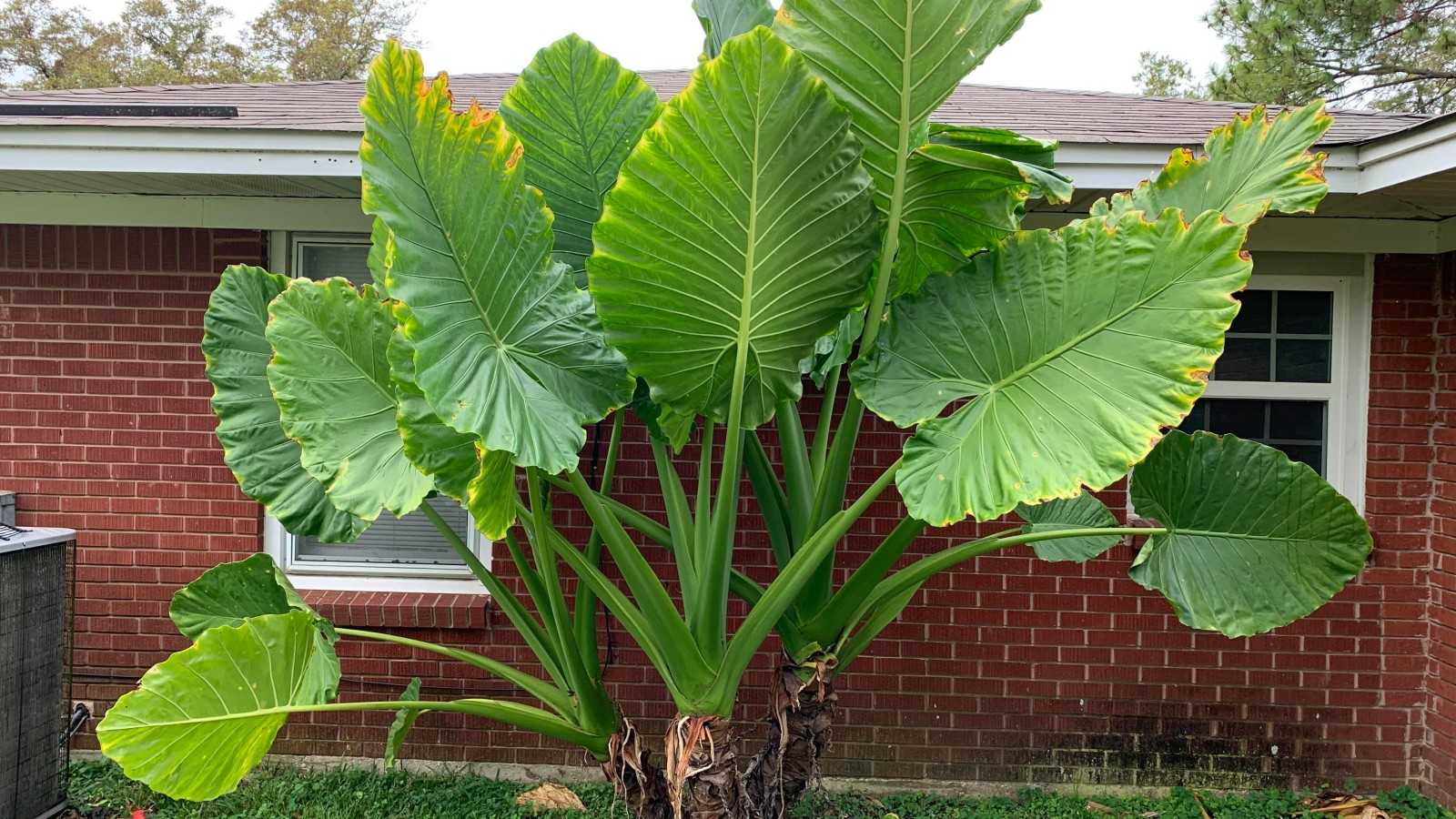
Botanically speaking, Alocasia macrorrhizos is a perennial rhizomatous plant belonging to the Araceae family. It features thick, sturdy upright stems and huge, broad, shield-shaped leaves with a smooth, waxy glossy texture. The leaves display a rich deep emerald green color with prominent raised veins that create a ribbed, textured surface. Each leaf grows vertically outward rather than drooping down, giving the plant a neat, upright, architectural shape different from trailing or spreading elephant ear varieties.
During warm growing seasons, mature plants produce typical aroid flowers: pale green spathes with a central spadix, though blooms are rarely the main attraction, as the massive foliage remains the plant’s most stunning feature. After flowering, the plant may produce clusters of small red berries that contain seeds for natural propagation.
One reason Alocasia macrorrhizos has remained popular for centuries is its dual functionality. In landscape design, it acts as a perfect tropical focal point, creating instant jungle-style layering in garden beds, patio corners, and water feature edges. Its large leaves provide excellent shade coverage for smaller undergrowth plants, while its upright structure adds vertical height to flat garden layouts. In traditional tropical communities, its starchy underground rhizomes serve as an important food source after thorough processing and cooking, while young leaves are also edible when properly prepared.
However, it is critical to note that all raw parts of Alocasia macrorrhizos contain sharp calcium oxalate crystals, making the plant toxic to humans, cats, and dogs in its unprocessed state. Ingesting raw leaves or rhizomes causes severe throat irritation, swelling, and discomfort, so it must always be kept away from pets and young children in home landscapes.
Optimal Growing Conditions for Alocasia Macrorrhizos
Light is one of the most important factors that determine the size, color, and density of your giant taro’s foliage. In outdoor garden settings, Alocasia macrorrhizos thrives best in bright indirect sunlight or soft morning direct sun paired with afternoon shade. Early morning sunlight helps the plant develop deep green leaf color and strong stem thickness, while intense midday summer sun will scorch leaf surfaces, causing brown burnt patches and crispy edges. If planted in full heavy shade for too long, the plant will grow tall and leggy, with thin weak stems, pale dull leaves, and sparse foliage development. For indoor cultivation, place it near bright east or west-facing windows where it can receive consistent filtered light throughout the day. Low-light indoor environments will quickly slow growth and make the plant lose its signature lush tropical appearance.
Temperature and humidity directly control the growth speed of Alocasia macrorrhizos. This tropical plant loves warm weather and grows most actively when temperatures stay between 20°C and 30°C. It cannot tolerate frost or freezing temperatures; any exposure below 10°C will slow growth dramatically, and temperatures below 5°C will cause severe cold damage or plant death. In temperate zones with cold winters, gardeners must dig up outdoor rhizomes and store them indoors or grow the plant in movable pots for winter protection. High humidity is equally essential. The plant prefers humidity levels above 60 percent. Dry indoor air, especially during winter heating seasons, causes leaf tip browning, curled foliage, and stunted new growth. Regular misting, pebble trays, or placement near humid outdoor spaces can effectively maintain its preferred moisture levels.
Soil requirements for Alocasia macrorrhizos focus on richness, looseness, and drainage. It loves fertile, humus-heavy, slightly moist soil with a neutral to slightly acidic pH range. The ideal soil mix consists of rich garden loam, decomposed organic compost, peat moss, and a small amount of perlite or sand to improve drainage. Heavy clay soil that traps water will quickly lead to rhizome rot, one of the most fatal issues for giant taro. Unlike drought-tolerant succulents, this plant hates completely dry soil but cannot stand waterlogged conditions either. The perfect soil environment stays consistently damp, loose, and breathable, allowing the thick rhizome to absorb nutrients steadily without rotting. For potted plants, avoid cheap compact potting mixes; premium well-aerated tropical plant soil ensures long-term healthy growth.
Watering routines for Alocasia macrorrhizos change significantly with the seasons. In spring and summer, its peak growing period, the plant consumes massive amounts of water to support fast leaf expansion. Gardeners should water deeply and frequently, keeping the entire root zone evenly moist at all times. During hot summer heatwaves, outdoor plants may need daily watering to prevent soil drying. In fall and winter, as temperatures drop and growth slows, you must reduce watering frequency gradually. Overwatering in cold weather is the main cause of rhizome rot during dormancy. Always check soil moisture before watering; if the top two inches of soil still feel damp, hold off on irrigation. For indoor potted giant taro, avoid letting standing water accumulate at the bottom of saucers to protect the root system year-round.
Seasonal Care, Pruning and Fertilization Guide
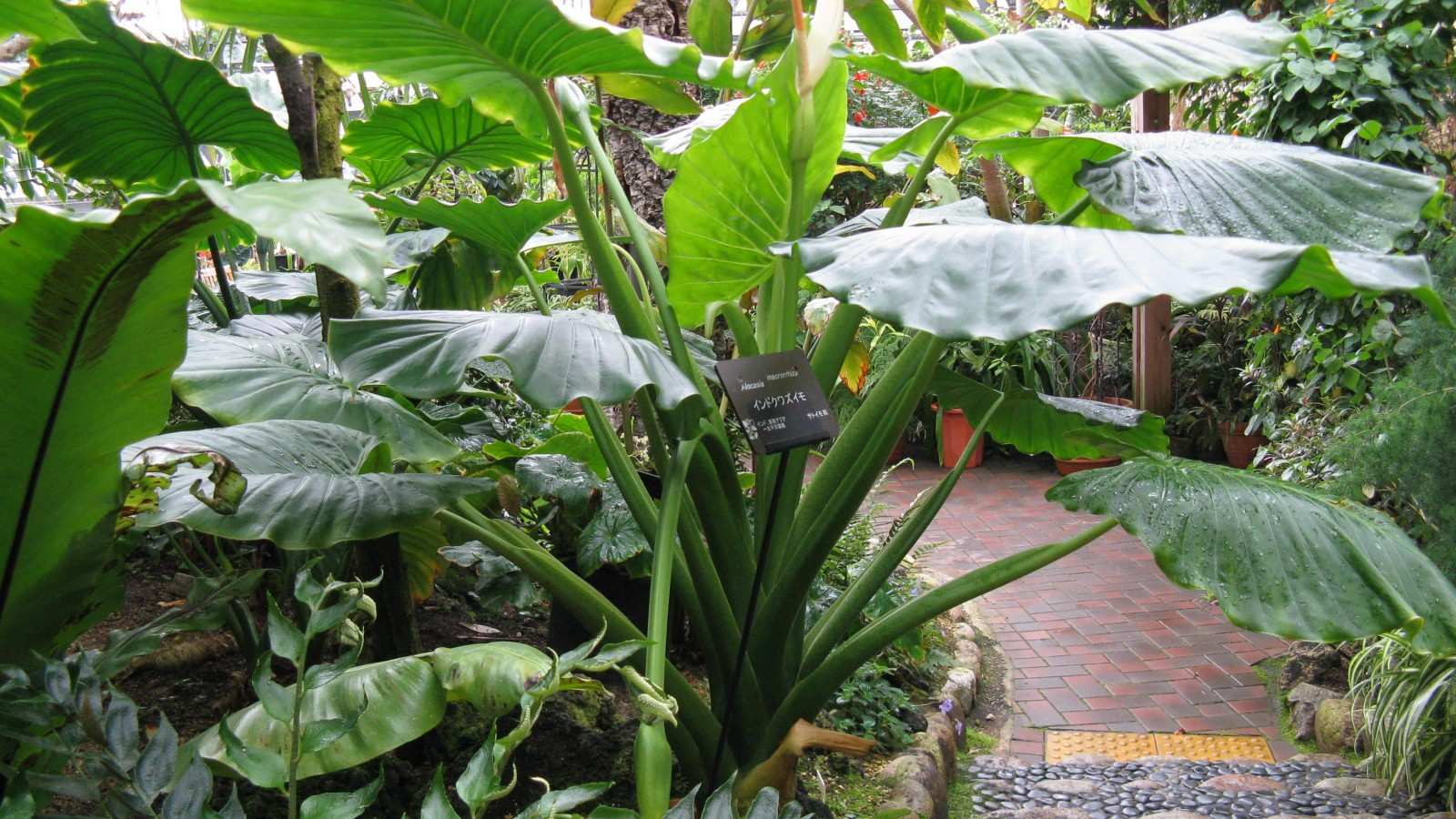
Proper fertilization helps Alocasia macrorrhizos reach its full giant foliage potential. During the active growing season from spring to early autumn, regular feeding encourages larger leaves, thicker stems, and faster rhizome expansion. Organic fertilizer is always the best choice for this foliage plant. Well-rotted compost, worm castings, and diluted liquid organic fertilizer provide gentle, balanced nutrients without burning tender roots. You can apply slow-release granular fertilizer once every one to two months or use diluted liquid fertilizer every two weeks for continuous nutrition. Avoid high-nitrogen-only fertilizers, which produce overly soft, weak foliage prone to pest damage and leaf breakage. Stop all fertilization completely once late autumn arrives, as the plant enters natural dormancy and no longer needs extra nutrients.
Pruning and daily maintenance for giant taro is simple and low-effort. The plant naturally sheds old lower leaves as new larger leaves grow from the center. You only need to trim off fully yellowed, damaged, or dead leaves regularly to keep the plant tidy and redirect energy toward new growth. Use clean, sharp pruning tools to make neat cuts, and avoid tearing stems or leaves, which can invite bacterial infection. If your plant grows too large for its space, you can trim oversized outer leaves to control size. In late winter or early spring before new growth emerges, you can clean up all leftover dead foliage to prepare the plant for vigorous spring regrowth. Regular pruning not only improves appearance but also increases air circulation around the plant base, reducing fungal disease risks.
Seasonal protection is critical for gardeners living in non-tropical climates. In summer, provide light afternoon shade to prevent sunscald during extreme heat. Maintain consistent humidity and check leaves frequently for spider mites and aphids, which thrive in hot, dry conditions. In autumn, gradually reduce water and stop fertilizing to help the plant harden off before winter. Once temperatures drop near freezing, outdoor garden plants must be protected. In mild zones, a thick layer of mulch over the rhizome can insulate roots through light frost. In cold zones, dig up the rhizome, clean off soil, and store it in a cool, dry, dark indoor location until spring replanting. Potted plants can simply be moved indoors to a warm bright room for winter dormancy.
Propagation of Alocasia macrorrhizos is straightforward and highly successful for home gardeners. The easiest method is rhizome division. During spring repotting or garden renewal, you can gently separate healthy offset rhizomes from the main parent clump. Ensure each divided section has at least one growing bud and a few healthy root strands. Let the cut surfaces dry and callus over for one day before replanting into fresh moist soil. Keep the new planted rhizomes in warm, bright, humid conditions, and new leaves will sprout within two to three weeks. You can also grow giant taro from fresh seeds harvested from ripe red berries, though rhizome division is far faster and more reliable for consistent plant growth.
Common Problems, Pests and Disease Solutions
Even though Alocasia macrorrhizos is hardy, it faces a few common growing issues that most gardeners will encounter. Yellowing leaves are the most frequent problem. Lower old leaves turning slightly yellow is a normal aging process and requires no worry. However, widespread yellow foliage on new growth usually signals overwatering, poor drainage, or root rot. If leaves turn yellow and feel soft and mushy at the base, you need to stop watering immediately, improve soil drainage, and check for rotted rhizomes. On the opposite side, crispy brown leaf tips and edges are caused by low humidity, underwatering, or too much direct hot sunlight. Adjusting humidity and light conditions will quickly fix this issue.
Pest infestations occasionally occur during hot, dry seasons. Spider mites, aphids, and mealybugs are the most common pests that target giant taro foliage. These tiny pests suck sap from leaves, causing faded color, stunted growth, and fine webbing on leaf surfaces. Regular leaf wiping and adequate humidity can prevent most pest outbreaks. When infestations appear, rinse leaves with clean water to remove pests, then apply diluted neem oil or organic insecticidal soap to eliminate remaining bugs. Always treat pest problems early, as severe long-term infestations will weaken the entire rhizome and affect next season’s growth.
Fungal diseases such as leaf spot and root rot mainly happen due to excessive moisture and poor air circulation. Leaf spot creates brown or black spots on foliage, gradually expanding and damaging large leaf areas. Root rot occurs underground due to waterlogged soil, causing wilting, yellowing, and eventual plant collapse. To prevent disease, always use well-draining soil, avoid overhead watering that wets leaves, space plants properly for airflow, and clean up fallen debris regularly. Infected leaves should be pruned and discarded immediately to stop fungal spores from spreading.
Landscape Value and Final Growing Tips
Alocasia macrorrhizos remains one of the best large tropical foliage plants for home gardens and indoor decoration. Its towering size, glossy massive leaves, and evergreen growth in warm seasons bring unmatched tropical ambiance. Outdoors, it works perfectly as a landscape focal point, border planting, waterside decoration, and tropical garden backdrop. Indoors, a single mature potted giant taro can instantly upgrade living rooms, lobbies, and bright office spaces with a lush, exotic vibe. It pairs beautifully with ferns, calatheas, and small tropical foliage plants to create layered, rich garden scenes.
Overall, Alocasia macrorrhizos is a low-maintenance, high-reward plant suitable for beginner and experienced gardeners alike. As long as you provide bright filtered light, warm temperatures, high humidity, rich well-draining soil, and seasonal watering adjustments, your giant taro will grow vigorously year after year. Always remember its toxic properties and place it safely away from pets and children. With simple daily care, this stunning giant tropical plant will grow bigger, lusher, and more beautiful each season, becoming the most eye-catching highlight in your garden or indoor plant collection.
Advertisement
Learn More
-

- October 20,2026
- Lily Disease Guide: Whats Killing Your Lilium longiflorum and How to Stop It
-
- September 17,2026
- Wax-Leaf Privet Diseases: Identification, Treatment & Prevention Guide
-
- September 1,2026
- Vinca Minor Diseases: Identification, Treatment and Long‑Term Garden Management
-
- August 18,2026
- Tree Philodendron Diseases: Identification, Treatment and Long‑Term Prevention
-
- August 6,2026
- Common Ailments of Plantago major: Identifying, Treating and Preventing Diseases in Broadleaf Plantain
-
- July 30,2026
- Zodiac-themed Bouquets Combined with Floral Language: Different Color Schemes Create More Artistic Birthday Surprises

Advertisement
 Poisonous and danger
 Edible and medicinal
 Wild and common weed